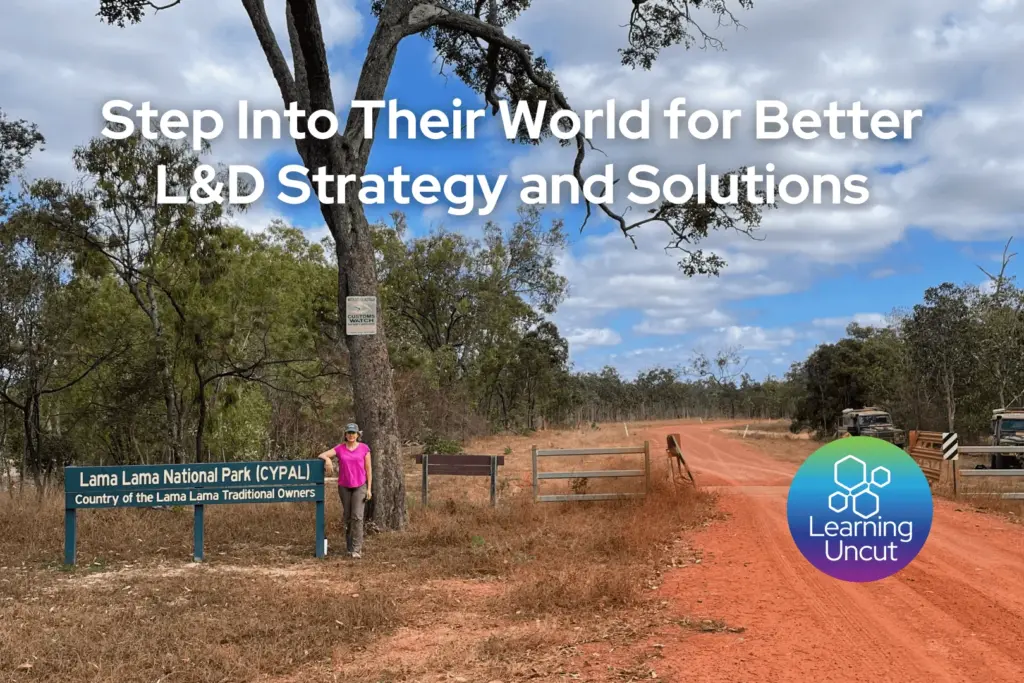
In mid-August this year I set off with friends on a two-week four-wheel drive trip through Cape York. By this time, I had been working for close to 18 months with the Northern Land Council (NLC), guiding them through developing their learning strategy in 2024 and recently starting to refresh their L&D operating model. We had completed our current state review and identified key challenges. Two weeks after my return, I was due to facilitate a future state workshop to reshape their model.
By Day 2 we were deep in remote bushland, travelling through Lama Lama National Park. We stopped for lunch at Scrubby Lagoon, a significant cultural site for the Lama Lama people. A small group of school children sat nearby with six women. Curious about ‘the Emu story’ mentioned on a sign, I asked if someone could share it.
I struck up a conversation with Elaine, an experienced ranger. Our brief exchange revealed her complex role: a deep understanding of cultural lore that she draws on when working with trust lawyers, combined with teaching experience in her work on cultural education and tourism. She also helps newer rangers learn their roles and supports others with technology. This was my first direct contact with someone doing ranger work in their actual work setting. While Elaine wasn’t part of the NLC workforce, I knew her experiences would echo those of many NLC rangers working in similarly remote, seasonal environments.
The next morning, driving along red gravel roads through dust and bumpy corrugations, my mind turned to the NLC rangers. I was experiencing an environment much closer to their workplace reality that my home office where I’ve done most of my work with NLC. The night before, our group had used Starlink in camp to connect to the internet. I watched as several people used Duolingo for language lessons.
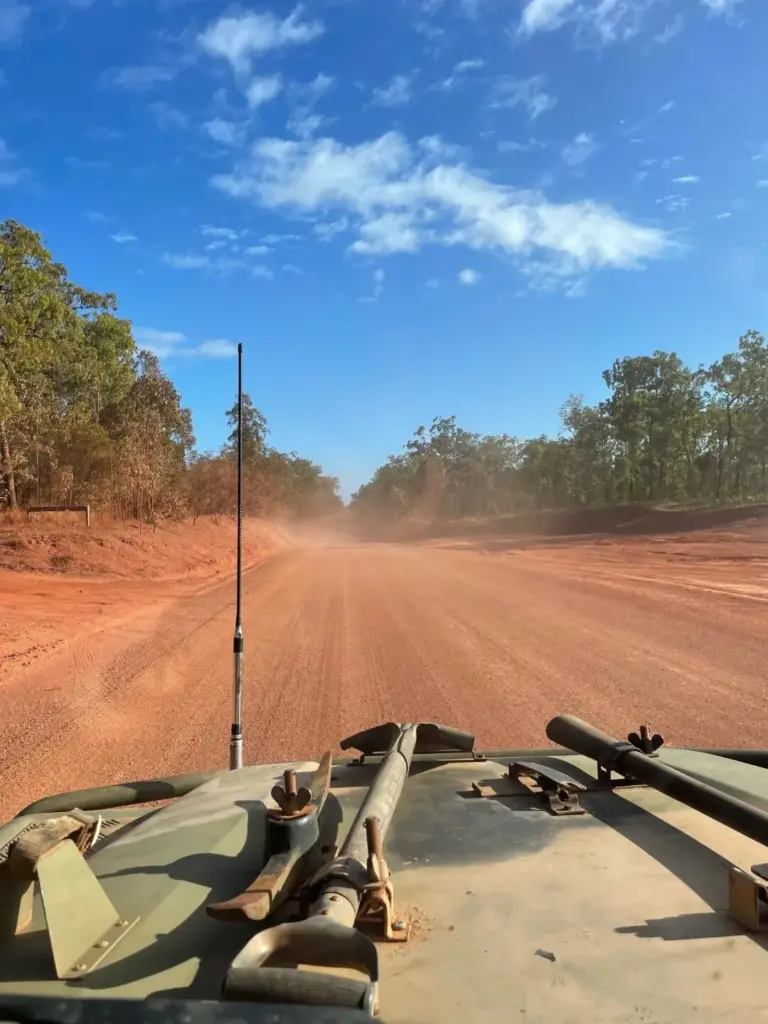
A new possibility sparked. If someone like Elaine could build rangers’ confidence with technology, and if Starlink connectivity was available, then supporting learning with mobile devices might offer more potential than I’d previously imagined. Ideas began flowing about addressing the challenges we’d identified, each insight sparking the next as the smell of the red dust filled the land rover cabin and the bush scenery rolled past.
The Extended Mind
Effective L&D professionals are constantly tuning in – not just to business strategy and stakeholder requests, but to the real-world settings where people work. While months of stakeholder consultations and documentation review had given me crucial insights in my work with NLC, it was physical immersion in a new environment that unlocked fresh perspectives on persistent challenges.
Reflecting on this experience, I was reminded of Annie Murphy Paul’s book The Extended Mind . Paul argues that our thinking isn’t confined to the brain. It extends through physical space, through the body and through other people.
Physical Space. Being in bushland so similar to NLC ranger country created a connection with their working reality. This context increased my empathy and made new ideas about their challenges more tangible.
The Body. Travelling rough, corrugated roads and immersing myself in the sensory landscape of Cape York jolted me into fresh connections. Physical movement and sensory variety sparked new ways of thinking.
Other People. My conversation with Elaine deepened my understanding in ways that documents and reports could not. Her lived knowledge and storytelling grounded my thinking in the concrete realities of ranger work.
This experience demonstrates a powerful truth for L&D professionals. When we step into the actual work environment, talk to people doing the real work, and connect with their experiences and feelings, we discover insights that offices and meeting rooms can’t provide. Going to where their work is done helps unlock fresh ideas about how we can support people to learn and perform.
Implications for L&D Professionals
This experience reinforced several lessons that we can all apply:
Immersion is Critical to L&D Professional Practice. Step into the environments where your people actually work. Whether you’re developing a learning strategy, creating a capability framework, analysing a performance gap or designing a learning solution, expose yourself directly to their work environment. This builds both credibility and insight that shift how you approach L&D challenges.
Embodied Strategic Thinking. Use physical movement and put yourself in a different environment to spark fresh thinking about complex L&D problems. When you’re stuck on issues like cultural transformation or skills development, literally move into a new space. Walk the factory floor. Use a hot desk in the contact centre. Visit remote sites. Go for an outdoors walk. Change your environment to unlock new perspectives.
Beyond the Office Bubble. Challenge the assumption that L&D strategy and solutions are best developed in meeting rooms. The most innovative solutions often emerge when you experience the friction, constraints and possibilities that exist in actual work environments. Make contextual exploration a standard part of how you work.
Technology in Context. Evaluate digital learning tools within the real conditions where they’ll be used. Technology solutions that work well in office environments may work very differently in other workplace settings. Understanding these realities shapes smarter decisions.
Where Will You Go?
Physical space actively shapes how we think and the and solutions we consider. The best L&D thinking often emerges when we step out of our offices and into the reality of the people we support – or a different environment altogether.
What blinkers might lift and new possibilities arise if you visited your learner’s workplace while working on your next strategy or solution?